Introduction
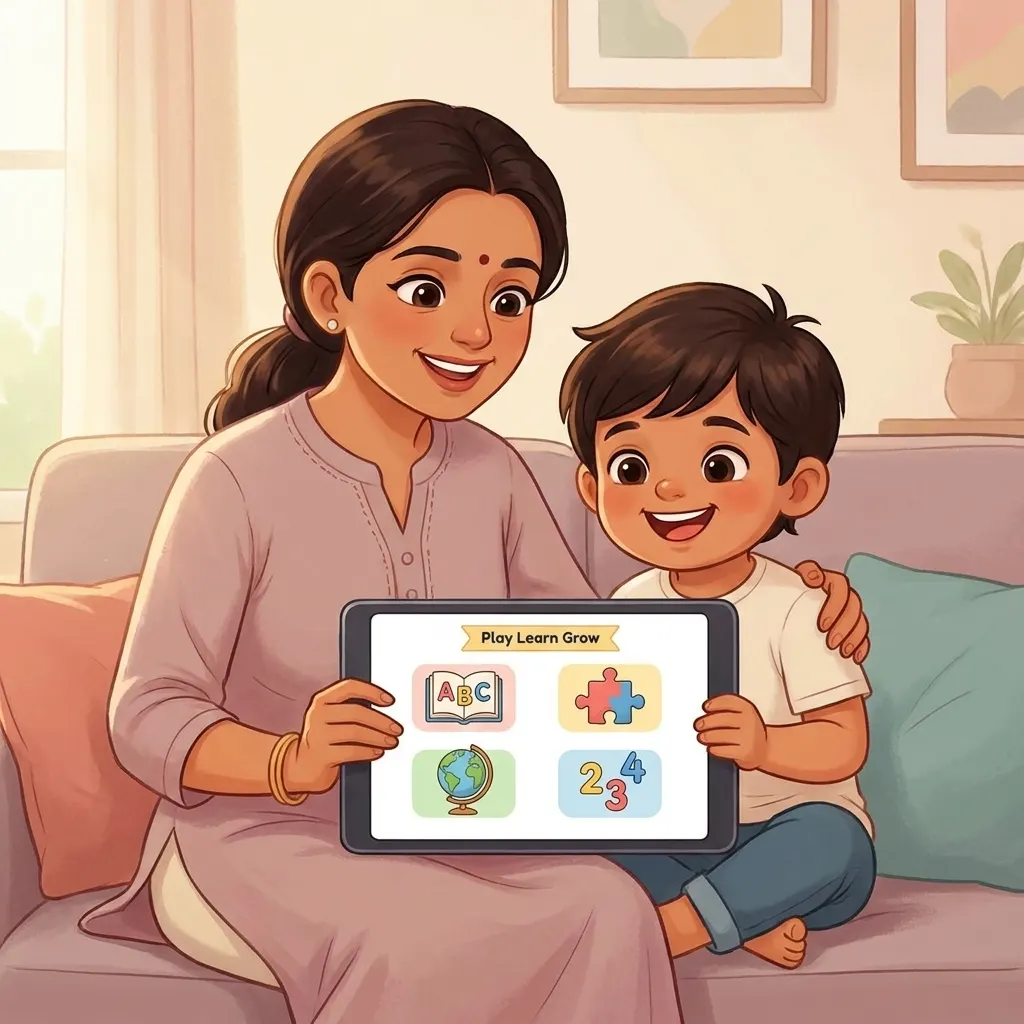
Many parents notice that their children are highly active and talkative at home, but become shy, quiet, or hesitant when asked to speak in front of teachers, relatives, or in social settings. Building speech confidence in early childhood (ages 3 to 6) is key to developing strong communication skills, emotional intelligence, and primary school readiness.
Speech confidence is not an innate talent—it is a skill built through safe, patient practice. By turning speech exercises into playful games and introducing friendly interactive buddies, you can help your child find their voice.
In this guide, we outline 5 simple home exercises to improve pronunciation and speaking confidence, and show how Owlie, our friendly AI Learning Buddy, helps children practice speaking without fear of judgment.
Meet Owlie: Your Child's AI Learning Buddy
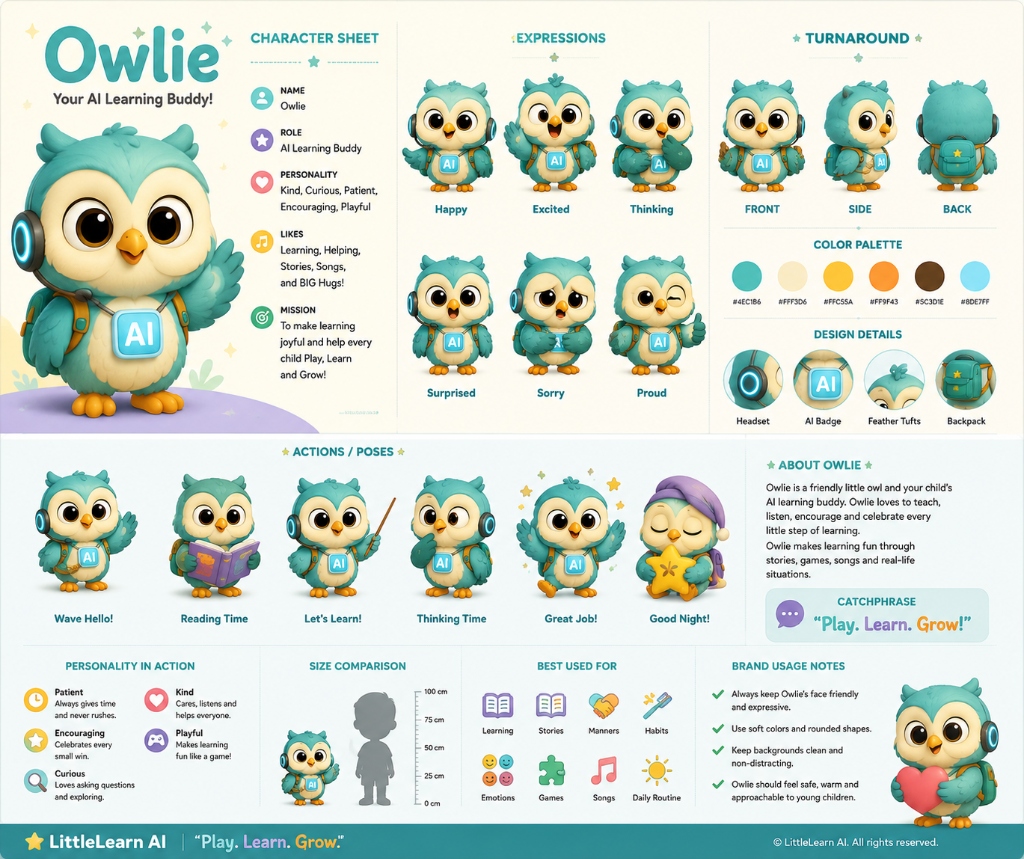
To make speaking practice fun and non-threatening, we designed Owlie—an encouraging, patient AI companion who guides children through their learning journey.
Owlie’s Personality Profile
| Attribute | Profile Details | How It Helps Your Child |
|---|---|---|
| Personality | Kind, Curious, Patient, Encouraging, Playful | Provides a safe, pressure-free space for kids to try, fail, and try again. |
| Likes | Learning, Helping, Stories, Songs, and BIG Hugs! | Connects educational tasks to warm, positive associations. |
| Mission | To make learning joyful and help every child Play, Learn, and Grow! | Avoids rigid drills in favor of playful, active participation. |
| Catchphrase | "Play. Learn. Grow!" | Encourages a growth mindset where learning is a fun journey. |
5 Simple Home Exercises to Build Speech Confidence
These non-digital games can be played anywhere—in the car, at the dinner table, or during playtime. They are designed to expand vocabulary, refine pronunciation, and build confidence:
1. The Echo Game (Modeling & Repetition)
- Goal: Teach correct pacing, tone, and pronunciation.
- Steps:
- Say a short, expressive phrase: "I see a big, blue balloon!"
- Have your child "echo" it back to you, matching your enthusiasm and vocal volume.
- Start with 3-word phrases and work up to longer sentences. This helps train their auditory memory.
2. Story Relay (Creative Expression)
- Goal: Encourage continuous speaking and sentence construction.
- Steps:
- Start a simple story: "Once upon a time, there was a little bird named Owlie who had a shiny green backpack..."
- Stop and let your child invent the next sentence: "And he flew into a big tree!"
- Take turns adding one sentence at a time. This exercise removes the fear of saying the "wrong" thing because there are no wrong answers in a custom story.
3. Toy Show-and-Tell (Public Speaking Intro)
- Goal: Build comfort speaking about a topic.
- Steps:
- Have your child choose their favorite toy.
- Set a timer for 1 minute and ask them to tell you 3 things they love about the toy: "What color is it? What is its name? How does it play?"
- Provide a warm, attentive audience. Give them a big round of applause when they finish to build a positive reward cycle.
4. Fast Word Association (Speech Reflexes)
- Goal: Reduce hesitation and build rapid word retrieval.
- Steps:
- Call out a category, like Colors or Animals.
- Take turns naming items as fast as you can: "Red!" -> "Blue!" -> "Green!"
- Playing at a fast pace helps bypass the self-conscious filter that often causes shy children to freeze up.
5. Character Voice Acting (Speech Modulation)
- Goal: Develop vocal range and expressiveness.
- Steps:
- Read a sentence from a book.
- Ask your child to repeat it in a different "character voice": “Say it like a giant!” (deep, slow voice), “Say it like a tiny mouse!” (high, squeaky voice), or “Say it like a happy owl!”.
- Modulating volume and pitch helps children discover the power of their voice and reduces vocal hesitation.
How Owlie Helps Kids Practice Speaking in the App
While practicing with parents is ideal, busy schedules can make it difficult. That is where Owlie steps in as your child's digital co-teacher inside the PLG Kids app.
   [ Child Speaks ]  👉  [ Microphones Evaluates Locally ]  👉  [ Owlie Reacts ]
(Reads word aloud)         (No remote server lag/privacy risk)    (Happy, Excited, Proud)
Here is how Owlie is integrated into the speaking check loop to support confidence:
- Expressive Visual Feedback: When your child speaks, Owlie listens intently (wearing his special blue headset). If the pronunciation is correct, Owlie waves, hops with excitement, or smiles proudly, giving instant visual validation.
- Patient, Pressure-Free Guidance: If a child mispronounces a word, Owlie never says "That is wrong." Instead, he displays a thinking or encouraging expression, modeling the correct sound again and inviting the child to try at their own pace.
- Safe Local Processing: All microphone audio is evaluated 100% locally on your tablet or phone. No voice recordings are uploaded to remote servers, keeping your child's data completely secure and private.
The Speech Confidence Tracker (For Parents)
Keep track of your child's communication milestones with this simple parent checklist. Celebrate every step forward!
- Level 1: Sound Mimicking — Repeats individual letter sounds (/b/, /s/, /t/) clearly when prompted.
- Level 2: Vocal Repetition — Repeats 3-to-4 word phrases aloud with clear pronunciation.
- Level 3: Independent Labeling — Spontaneously names objects around the house without prompting.
- Level 4: Vocal Variety — Expresses emotions (excitement, questioning) by modulating their pitch.
- Level 5: Interactive Dialogue — Initiates and holds a simple 3-sentence conversation with parents or peers.
Frequently Asked Questions (FAQ)
My child is talkative at home but quiet at school. Why?
This is very common and is known as situational shyness. Home is a familiar environment with no peer evaluation. To bridge the gap, practice simple public-speaking games like Show-and-Tell at home to make speaking in structured settings feel familiar.
How does speech verification software help with shyness?
Shy children are often afraid of negative judgment or making mistakes in front of adults. An AI buddy like Owlie provides a neutral, friendly audience. The child can practice repeating words 20 times without feeling embarrassed or rushed.
Can bilingual children build speech confidence in both languages?
Absolutely. Multilingual children often take slightly longer to organize vocabulary, leading to pauses or hesitation. Exercises like the Fast Word Association game help speed up word retrieval in both English and their native tongue.