Introduction
In India, raising bilingual or multilingual children is the norm. Many kids grow up listening to English at school and regional languages at home. However, when it comes to formal reading and writing, children in English-medium preschools often struggle to grasp the Hindi Varnamala (alphabet).
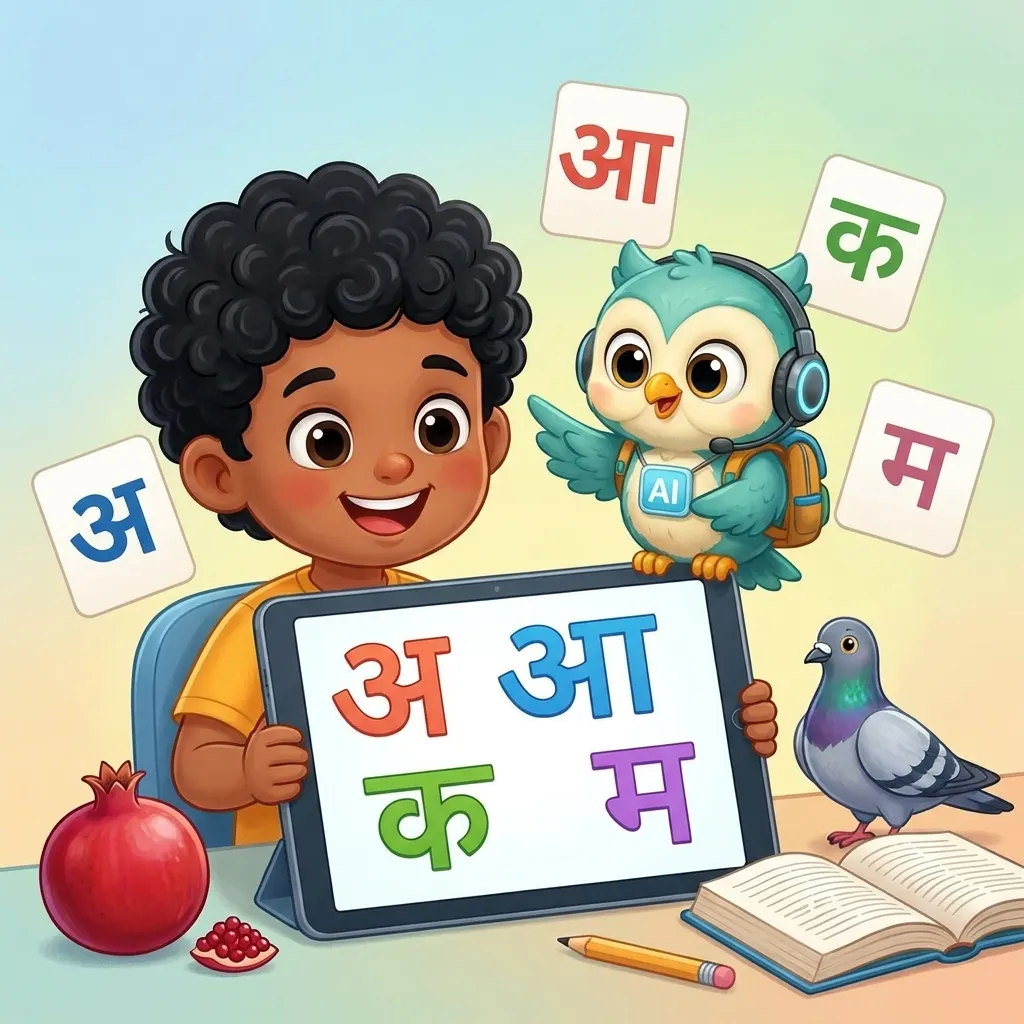
Memorizing 13 vowels (Swar like अ, आ, इ) and 36 consonants (Vyanjan like क, ख, ग) can feel overwhelming. Unlike English, Hindi is a highly phonetic language—every letter is pronounced exactly as it is written. Therefore, the secret to teaching Hindi is focusing on correct pronunciation (Ucharan) and visual association.
The Bilingual Challenge: Grasping Hindi Sounds
Bilingual children often face specific hurdles when learning the Hindi Varnamala:
- Speech Substitutions: Substituting similar-sounding English consonants for Hindi sounds (e.g., pronouncing the retroflex ट like the soft dental t sound).
- Lack of Audio Feedback: Traditional Hindi worksheets only practice writing, leaving children with no way to check if their spoken pronunciation is correct.
- Complexity of Shapes: Hindi characters have unique strokes and top lines (Shirorekha) that require tactile, visual associations to memorize.
3 Playful Hindi Varnamala Games for Parents
Make Hindi practice conversational and active with these simple home activities:
1. Hindi Swar Match
- Goal: Connect vowels with familiar vocabulary.
- Steps:
- Write Swar like अ, आ, and इ on index cards.
- Gather real household objects like an apple (अमूद / Guava), mango (आम), or tamarind (इमली).
- Let your child match the object to the correct vowel card while saying the sound: "आ for आम!"
2. Vyanjan Sound Bingo
- Goal: Practice distinguishing consonant sounds.
- Steps:
- Draw a 3x3 grid on a paper, writing one Hindi consonant in each box (e.g., क, ख, ग, च, छ).
- Call out a word: "कबूतर!" (Pigeon).
- Your child must find the letter क on their grid, place a coin on it, and shout the letter sound: "/ka/!"
3. Air Writing and Tracing
- Goal: Build muscle memory for Hindi strokes.
- Steps:
- Write a large Hindi letter (like क) in sand, flour, or shaving cream.
- Guide your child to trace the letter with their index finger, repeating the sound as they move: "Start with the loop, go down, curl, and add the roof line. /ka/!"
How PLG Kids Supports Bilingual Hindi Learning
To help bilingual children develop native-level Hindi pronunciation, the PLG Kids app features a dedicated Hindi Letters & Pronunciation module.
   [ Screen Shows अ ]  👉  [ Hear Native Speaker ]  👉  [ Child Speaks ]
(Vibrant visual card)       (High-quality audio check)     (Microphone checks ucharan)
Our app makes Hindi learning interactive and fun:
- Native Audio Verification: The app features high-quality audio clips recorded by native speakers, teaching kids the correct Ucharan for Swar and Vyanjan.
- Speak-to-Verify Engine: Children speak Hindi words into the microphone. Our on-device AI speech check verifies their pronunciation, ensuring they learn the subtle differences between dental and retroflex sounds.
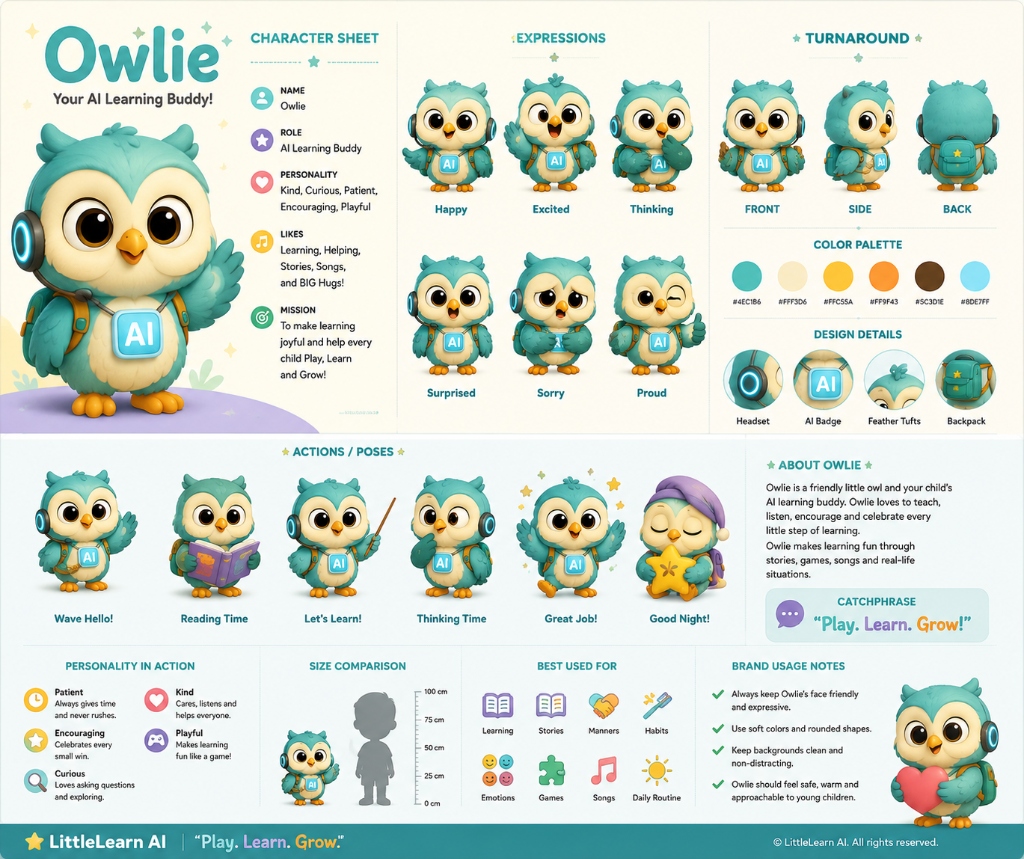
- Gamified Letter Tracing: Children trace Swar and Vyanjan on screen with animated guides, earning stars and positive reactions from Owlie.
Check out the interactive activities in the PLG Kids learning app today!
Frequently Asked Questions (FAQ)
What is the best age to start teaching Hindi Varnamala?
You can start introducing Hindi Swar (vowels) through oral songs and stories around age 3 (Nursery). By age 4 to 5 (LKG/UKG), children are ready to learn Vyanjan (consonants) and practice tracing shapes and speaking words.
My child pronounces Hindi words with an English accent. How do I correct this?
Avoid interrupting them harshly. Instead, use apps like PLG Kids where they can listen to native audio models repeatedly, and practice speaking into the microphone. The app's speech engine offers neutral, patient feedback, helping them adjust their pronunciation gradually.
Are Swar or Vyanjan taught first?
Swar (vowels) are always taught first because they form the foundational sounds of the language. Vyanjan (consonants) are introduced next, followed by combining Swar and Vyanjan to form simple words.