Introduction
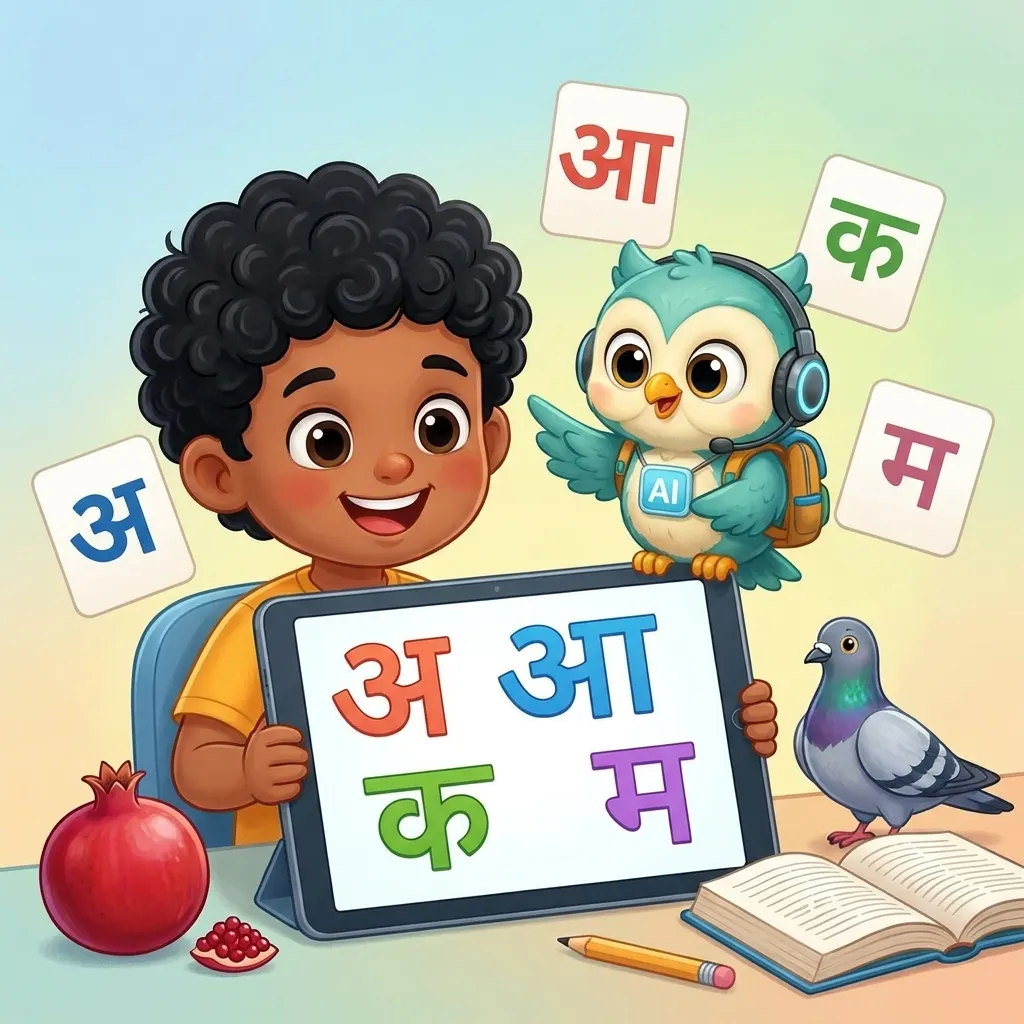
Teaching Hindi to children at home is a wonderful way to keep them connected to their cultural roots and build multilingual communication skills. The foundation of the Hindi language is the Hindi Varnamala (alphabet), which is divided into Swar (vowels like अ, आ, इ) and Vyanjan (consonants like क, ख, ग).
For young preschoolers, memorizing 13 vowels and 36 consonants can feel overwhelming if taught through traditional writing drills. Instead, using phonetic associations, songs, and interactive play makes Hindi learning a joyful activity.
Fun Ways to Teach Hindi Varnamala
Keep lessons active and hands-on with these simple home activities:
1. Sing Varnamala Rhymes
- Music is a powerful memory trigger. Sing the varnamala song together during playtime or car rides.
- Associate letters with actions. For instance, when singing "अ से अनार" (A for Pomegranate), pretend to eat an अनार, or for "म से मछली" (M for Fish), make hand waves like a swimming fish.
2. Play the Letter Hunt Game
- Write 5 Hindi letters on separate paper cups and place them around the room.
- Call out a letter, such as "क" (Ka).
- Ask your child to run and bring back the cup with that letter. This burns energy and builds visual recognition.
3. Trace Hindi Letters in Sand or Dough
- The curves and lines of Hindi characters (especially the top horizontal line, or shirorekha) can be tricky for little fingers to write.
- Have your child trace the shapes of letters like अ or क in playdough or sand. This builds fine motor control and tactile memory before they begin writing with a pencil.
Common Mistakes Parents Make
- Teaching Swar and Vyanjan All At Once: Trying to teach the entire varnamala together will frustrate your child. Focus on just 2 to 3 Swar per week, and introduce Vyanjan only after they are comfortable with vowels.
- Ignoring Pronunciation (Ucharan): Hindi is a highly phonetic language. How we write is exactly how we speak. Pay close attention to subtle sound differences, such as the difference between क (Ka) and ख (Kha), or ड (Da) and ढ़ (Dha).
- Passive Watching: Showing children passive Hindi nursery rhyme videos rarely helps them learn to speak. They need to hear a word, repeat it, and use it in conversational context.
Learn Hindi Naturally with PLG Kids
If you want a safe and interactive app for Hindi learning, explore the Hindi modules inside the PLG Kids learning app. In our Hindi Swar and Hindi Vyanjan games, kids see colorful visual associations, listen to native pronunciations, and speak the letters and words into the microphone. Our AI tutor listens to their ucharan (pronunciation) and rewards their efforts, building real confidence in speaking Hindi.
Frequently Asked Questions (FAQ)
What is the difference between Swar and Vyanjan in Hindi?
Swar are vowels (अ, आ, इ, ई, उ, ऊ, ऋ, ए, ऐ, ओ, औ, अं, अः) which can be pronounced independently. Vyanjan are consonants (क, ख, ग, घ...) which are pronounced with the help of a vowel sound.
How do I help my child write Hindi letters?
Start with tracing. Break the letter into strokes: first draw the curves, then the vertical standing line, and finally the top sleeping line (shirorekha). Practicing on large chalkboards or slate makes learning easier.
At what age should a child start learning Hindi Varnamala?
Children can start learning to recognize Hindi sounds and letters around age 3 or 4. Oral practice and vocabulary building through conversation should always precede writing.