Introduction
Most parents start teaching reading by reciting the alphabet: "A, B, C, D..."
However, when a child begins to read actual books, they quickly realize that the alphabet is confusing. If the letter C is called "See", why does it sound like /k/ in cat and /s/ in city? If the letter H is called "Aitch", how does it join with S to make /sh/ in ship?
The truth is, the English alphabet has only 26 letters, but spoken English is built from 44 distinct sounds (phonemes). If we only teach children the letter names, they get stuck. To become fluent readers and spellers, children must learn the 44 phonics sounds and how letters combine to make them.
The 44 Sounds Breakdown
To simplify phonics, educators divide the 44 English sounds into six main groups. Here is an overview:
1. Short Vowels (5 Sounds)
These are the most basic vowel sounds, usually taught first in CVC words:
- /æ/ as in cat
- /e/ as in hen
- /ɪ/ as in pig
- /ɒ/ as in dog
- /ʌ/ as in cup
2. Long Vowels (5 Sounds)
Vowels that "say their own name":
- /eɪ/ as in paper or tray
- /i:/ as in bee or meet
- /aɪ/ as in light or kite
- /əʊ/ as in boat or coat
- /u:/ as in moon or blue
3. Consonants (18 Sounds)
Basic single-letter consonant sounds:
- /b/ (bat), /d/ (dog), /f/ (fan), /g/ (gate), /h/ (hat), /j/ (jam), /k/ (key), /l/ (leg), /m/ (man), /n/ (net), /p/ (pen), /r/ (run), /s/ (sun), /t/ (tent), /v/ (van), /w/ (wig), /y/ (yo-yo), /z/ (zip).
4. Digraphs (7 Sounds)
Two consonants joining together to make a completely new sound:
- /ʃ/ (sh in ship), /tʃ/ (ch in chin), /θ/ (th in thin), /ð/ (th in this), /ŋ/ (ng in sing), /hw/ (wh in wheel), /ʒ/ (s in treasure).
5. Diphthongs & R-controlled Vowels (9 Sounds)
Gliding vowels and vowels modified by the letter R:
- /aʊ/ (ou in out), /ɔɪ/ (oi in coin), /a:/ (ar in car), /ɔ:/ (or in fork), /ɜ:/ (ur in nurse / ir in bird), /eə/ (air in chair), /ɪə/ (ear in hear), /ʊə/ (ure in pure), /ə/ (the neutral "schwa" sound like a in about).
Why Phoneme Awareness Matters for Spelling
If a child only memorizes words visually, their vocabulary is limited. But when they understand phonemes:
- Spelling becomes logical: If they hear the word fish, they break it down: /f/ + /ɪ/ + /ʃ/. They know that /fff/ is F, /ɪ/ is I, and /ʃ/ is SH. They can spell it without memorization.
- Decoding is faster: When encountering a long word like shopkeeper, they break it into syllables (shop-keep-er) and apply known sound rules to decode it easily.
Interactive Phonics Practice with PLG Kids
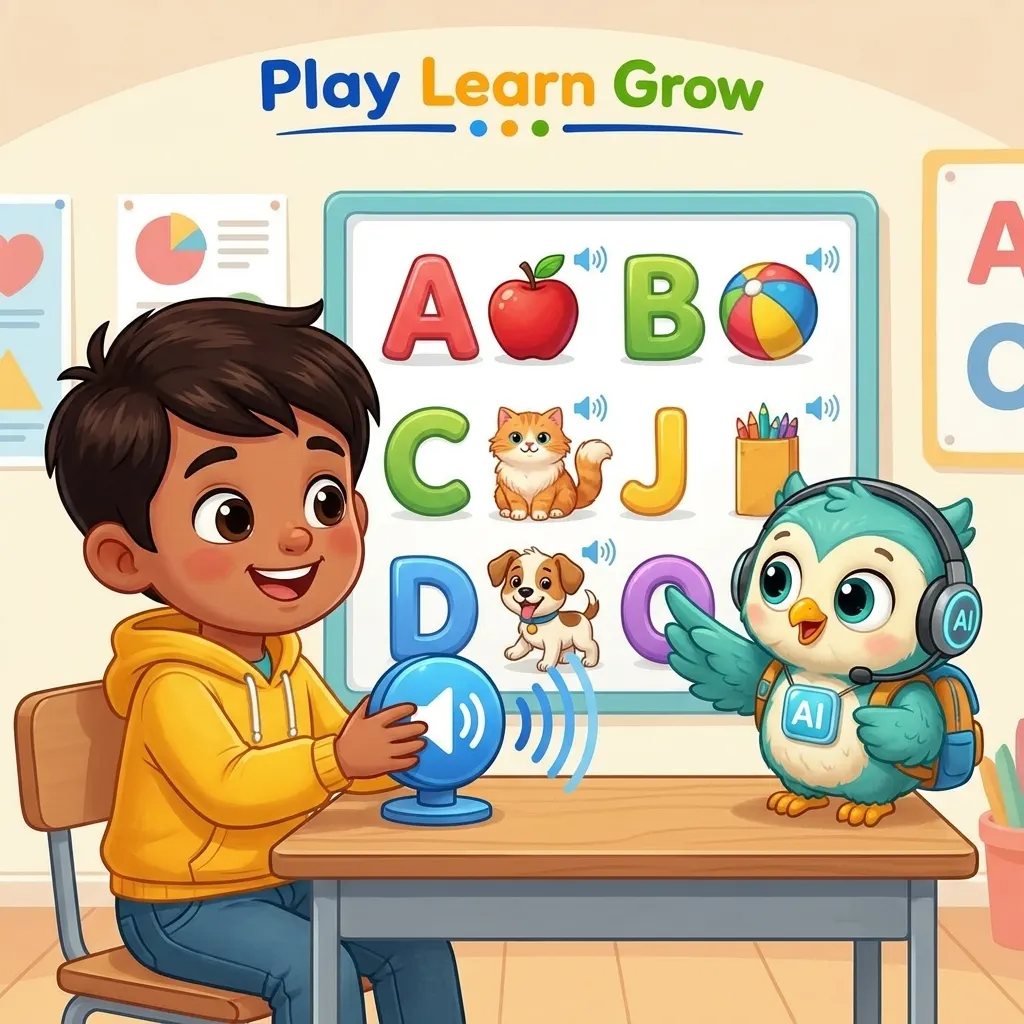
To make learning the 44 sounds engaging, the PLG Kids app features a structured 44 Phonics Sounds curriculum:
   [ Interactive Card ]  👉  [ Audio Modeling ]  👉  [ Speech Verification check ]
(Shows digraph: SH)          (Plays: "/sh/ as in ship")   (Child repeats: "/sh/ ship")
- Clean Sound Isolation: We avoid confusing letter-names. Our modules focus 100% on the phonetic sounds, showing kids how letters make sounds in context.
- WebGL Interactive Puzzles: Kids match letter combinations (graphemes) with their corresponding sound groups through colorful card matches and sorting games.
- On-Device Speech check: Children speak the sounds directly into the microphone. Owlie checks their pronunciation and rewards correct articulation.
Check out the interactive activities in the PLG Kids learning app today!
Frequently Asked Questions (FAQ)
When should I start teaching the 44 phonics sounds?
Start with the 5 short vowels and basic consonants around age 3-4 (Nursery/LKG). Once they can blend CVC words, introduce digraphs (sh, ch, th) and long vowels around age 5 (UKG).
What is the difference between a phoneme and a grapheme?
A phoneme is the smallest unit of sound in a language (e.g., the sound /sh/). A grapheme is the written representation of that sound (e.g., the letters S and H).
My child mixes up /f/ and /th/. How do I help?
This is a very common articulation milestone. Show your child your mouth when making the sounds: for /f/, your top teeth touch your bottom lip. For /th/, your tongue sits between your teeth. Practice this mirror modeling alongside speech checks in PLG Kids.