
Introduction
Teaching your four-year-old to read is one of the most rewarding journeys you can embark on as a parent. At this age, children's brains are like sponges, ready to absorb letter shapes and the sounds they make. Rather than forcing memorization, the most effective way to teach reading is through Phonics—the relationship between letters (graphemes) and their sounds (phonemes).
By focusing on sounds first, you give your child the tools to decode any word they encounter. This guide will walk you through a step-by-step method to teach phonics at home using simple, parent-friendly techniques.
Step-by-Step Phonics Activities
Here is a structured sequence you can follow with your child. Spend 10 to 15 minutes daily on these activities. Keep it fun, light, and full of praise.
1. Introduce Letter Sounds (Not Just Names)
When pointing to the letter S, do not just say "This is Es." Instead, make the sound: "This letter makes the /sss/ sound, like a slithering snake."
- A makes the /æ/ sound (as in apple)
- B makes the /b/ sound (as in bat)
- T makes the /t/ sound (as in tap)
- Focus on lowercase letters first, as 95% of the text children see in books is in lowercase.
2. Play Sound Isolation Games
Before kids can read letters, they need to hear the sounds in spoken words.
- Beginning Sounds: Ask, "What sound does 'banana' start with?" Help them isolate the /b/ sound.
- I Spy: Play "I spy with my little eye, something starting with the sound /mmm/." (e.g., milk, mat, mug).
3. Move to Blending Sounds Together
Once your child knows 4 or 5 letter sounds, teach them how to slide the sounds together to make a word.
- Start with simple two-letter blends: /a/ + /t/ = at.
- Move to three-letter consonant-vowel-consonant (CVC) words: /s/ + /a/ + /t/ = sat.
- Use physical objects or cards. Lay down the cards S, A, and T, touch each letter to make its sound, and then slide your finger under them quickly to say "sat".
Common Mistakes Parents Make
- Teaching Capital Letters First: Capital letters are only used at the beginnings of sentences and names. Teaching lowercase letters first makes reading books much easier.
- Adding an 'Uh' sound (Schwa): Be careful to teach clean sounds. For example, the letter T makes a crisp /t/ sound, not /tuh/. Saying /tuh-æ-puh/ makes it very hard for a child to blend the word "tap".
- Passive Screen Time: Letting children watch passive cartoon videos won't teach them how to speak and participate. They need active practice where they hear a prompt and speak back.
How PLG Kids Can Help
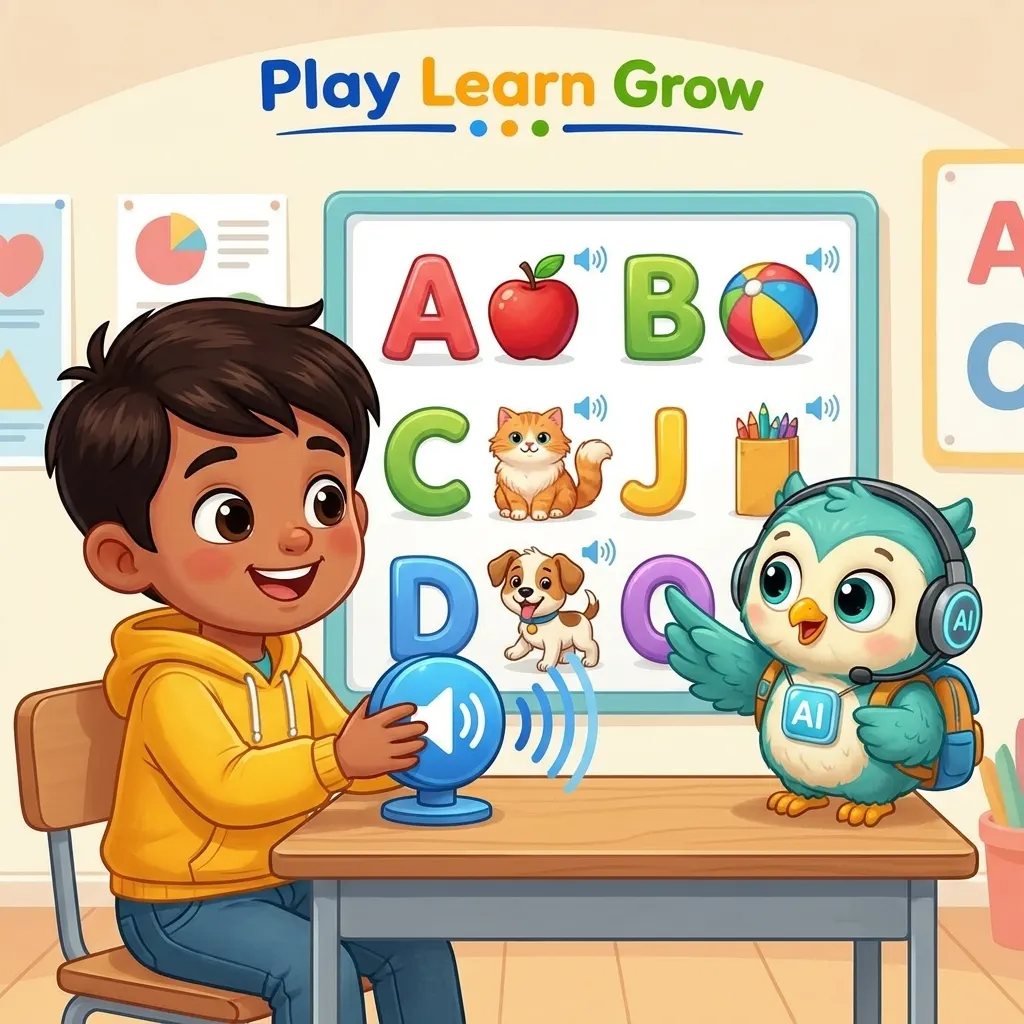
At PLG Kids, we believe in active participation. Passive videos don't answer back. In our ABC Phonics module, children listen to letter sounds, see real visual associations, and speak the letters back into the microphone. Our AI tutor listens and gives gentle feedback, helping shy or hesitant children build everyday confidence. You can try these interactive phonics games in the PLG Kids learning app today.
Frequently Asked Questions (FAQ)
What age is best to start teaching phonics?
Most children are ready to learn basic letter sounds around age 3 or 4. Start with simple listening games before moving to letters.
My child mixes up letter sounds. What should I do?
This is completely normal. Keep practice short and focus on just 2 or 3 sounds at a time. Repeat them daily through games.
How is phonics different from sight words?
Phonics teaches children to decode words by sounding them out. Sight words are words that children learn to recognize by sight because they cannot easily be sounded out (like "the" or "was").