
Introduction
At age three, a child’s brain is rapidly developing language and auditory processing skills. While it is far too early to expect them to read full books or write words, it is the perfect time to build phonological awareness—the ability to hear, identify, and play with sounds in spoken words.
For parents looking to give their children a head start, introducing phonics at age 3 should be entirely conversational, physical, and play-based. Introducing sounds early helps build speech clarity and prepares their minds for structured preschool learning (like Nursery and LKG) later on.
Why Phonics for 3-Year-Olds is Essential
Before a child can read printed letters, they must learn to hear the sounds that make up words. Introducing gentle phonics at age three offers several crucial development benefits:
- Improves Speech & Articulation: Practicing individual letter sounds like /p/, /t/, and /m/ helps toddlers refine their tongue and lip movements, leading to clearer speaking.
- Develops Auditory Discrimination: Listening games train your child's brain to distinguish between similar-sounding words (like cat and cap), which is key for reading success.
- Establishes a Positive Learning Loop: When phonics is taught through games, children associate learning with fun and success, raising their confidence to speak and participate.
3 Practical Phonics Activities for Parents
You do not need flashcards, worksheets, or writing drills. Here are three simple, non-digital activities you can try at home today:
1. The Sound Box
- Goal: Connect concrete objects with their beginning letter sounds.
- Materials: A small cardboard box, and 3-4 familiar items from around the house (e.g., a ball, a cup, a toy car).
- Steps:
- Place the items inside the box.
- Pull out the ball and say: "Look! I found a ball. /b/-/b/-ball. Can you say /b/?"
- Encourage your child to repeat the sound, not just the word. Repeat with other items.
- Keep it limited to just 2 or 3 sounds per session to avoid overwhelming them.
2. "I Spy" Sound Game
- Goal: Develop ear training and beginning sound identification.
- Steps:
- Pick a room in your house and select an obvious object (like a banana on the dining table).
- Say: "I spy with my little eye, something on the table that starts with the sound /b/."
- If your child struggles, make the sound longer and give visual clues: "It is yellow, and it starts with /b/-/b/-/b/."
- Once they guess, celebrate and let them try to "spy" an object for you.
3. Silly Rhyme Matching
- Goal: Teach children to recognize word endings and rhyming patterns.
- Steps:
- Gather a couple of rhyming toy pairs if possible, or just use words.
- Say a simple phrase: "The cat sat on the..." and pause, letting your child complete it with "mat!" or "hat!"
- Play with nonsense rhyming words to keep them laughing: "Does dog rhyme with log? Yes! Does dog rhyme with spoon? No, that sounds silly!"
Common Mistakes to Avoid
- Focusing on Letter Names First: Many parents teach the alphabet by saying "A, B, C..." (naming the letters). For reading, the sound the letter makes is much more important. Teach them that the letter S makes the sound /sss/, rather than calling it "Ess."
- Pushing for Writing Too Early: A 3-year-old's finger muscles are still developing. Forcing them to hold pencils and write letters can frustrate them. Focus 100% on listening and speaking sounds instead.
- Correcting Speech Harshly: If your child pronounces a sound incorrectly, do not say, "No, that is wrong." Instead, model the correct pronunciation clearly: "Yes, that is a /fff/-fish!"
How PLG Kids Supports Active Speech Development
If you want to transition your child away from passive video-scrolling into constructive learning, explore the toddler modules in the PLG Kids app.
- Toddler Rhymes & Sound Matches: Our interactive nursery rhymes and phonetic lessons let your child listen to native speakers and repeat sounds back.
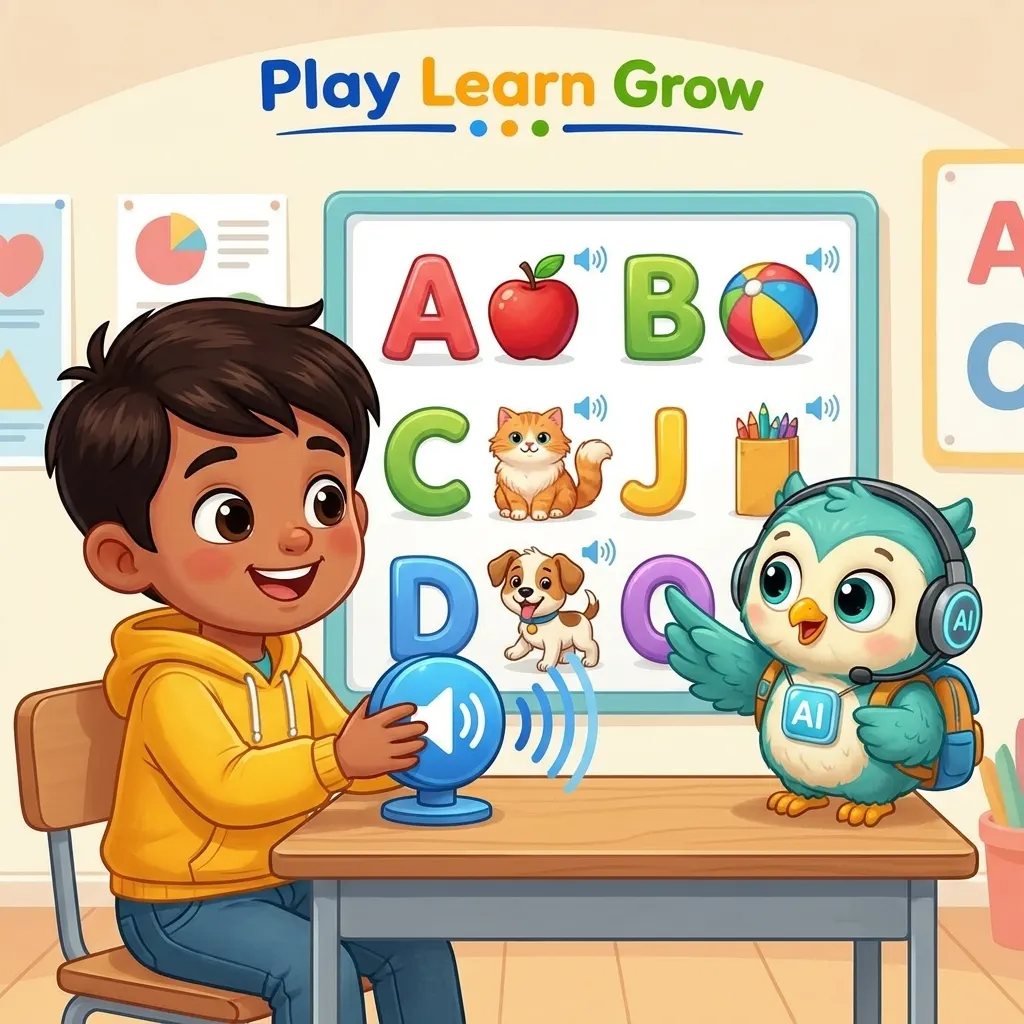
- Active Speaking Feedback: Children speak directly into the microphone, and our gentle local AI checks their pronunciation, giving positive rewards and stars to build speaking confidence.
- Ad-Free Safety: With a clean UI and no external advertisements or social features, your child can practice their sounds in a safe environment.
Check out the interactive activities in the PLG Kids learning app today!
Frequently Asked Questions (FAQ)
What is the best way to practice phonics for 3 year olds daily?
Keep it short and integrated into daily routines. Spend no more than 5 to 10 minutes at a time. Practice sounds while eating breakfast, pointing out items on walks, or reading a bedtime story.
How do I know if my child is struggling or just needs time?
At age 3, progress is slow and non-linear. If they cannot identify a beginning sound, it is completely normal. Keep playing the games without pressure, and focus on simple listening comprehension first.
Can bilingual kids practice this?
Yes! Bilingual children actually benefit from phonics as it helps them differentiate between the phonemes (sounds) of English and their mother tongue. PLG Kids supports bilingual pronunciation checks to make this transition seamless.